Beyond the Screen: How Immersive Tech is Redefining Our Digital Interactions

The Dawn of Immersion: A New Chapter in Tech
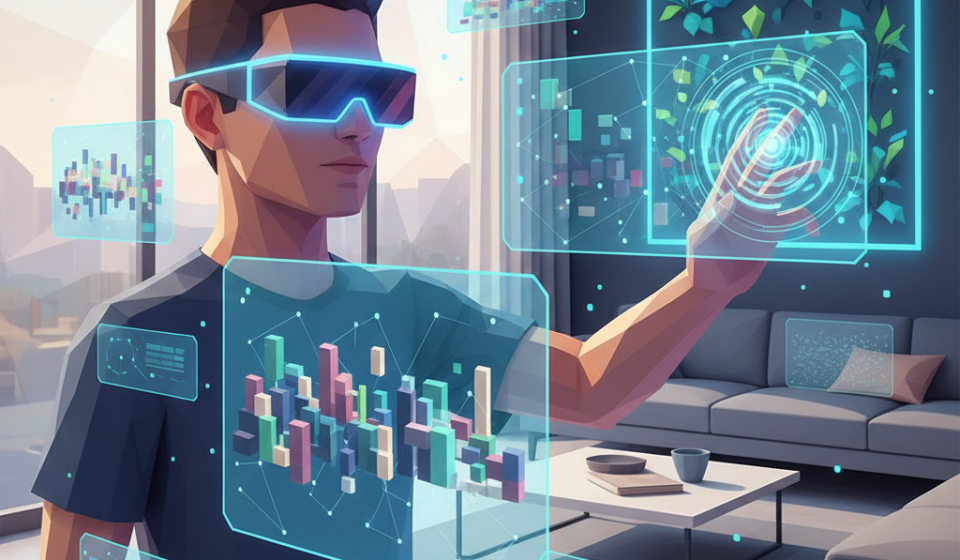
The world of technology is constantly evolving, pushing the boundaries of what’s possible and reshaping how we interact with information, entertainment, and each other. While smartphones and flat screens have dominated our digital lives for decades, a new paradigm is emerging: immersive technology. This isn’t just about virtual reality (VR) headsets; it’s a sprawling ecosystem encompassing augmented reality (AR), haptic feedback, and advanced mixed reality (MR) experiences that blur the lines between the physical and digital worlds.
From Pixels to Presence: The Evolution of Immersive Tech
The concept of immersion isn’t new. From early stereoscopes to 3D movies, humans have always sought to enhance their sensory experiences. However, modern immersive tech takes this desire to unprecedented levels. We’re moving beyond simply viewing content to actively participating in it. Think of a surgeon practicing complex procedures in a virtual operating room, an architect walking through a photorealistic 3D model of their building, or friends collaborating on a project in a shared digital space, all feeling as if they are truly together.
The Power of Presence: What Makes Immersive Tech Different?
The key differentiator of immersive technology is the feeling of “presence.” This isn’t just about high-resolution graphics; it’s a psychological state where your brain believes you are physically located in a virtual environment. This deep sense of engagement unlocks a vast array of possibilities across various sectors.
Transforming Industries: Beyond Gaming and Entertainment
- Healthcare: Medical training, therapy for phobias and PTSD, pain management, and even remote surgery assistance are being revolutionized by immersive technologies. Imagine a patient recovering from a stroke using VR games to rehabilitate their motor skills.
- Education: Immersive learning environments can transport students to ancient civilizations, inside the human body, or even to distant galaxies, making complex subjects more engaging and understandable. Field trips are no longer limited by geography or cost.
- Manufacturing and Design: Engineers can prototype and test designs in virtual environments, identifying flaws and making improvements before any physical materials are used. This significantly reduces costs and accelerates development cycles.
- Retail and E-commerce: ‘Try before you buy’ experiences are taken to a new level with AR. Customers can virtually try on clothes, place furniture in their homes, or even test drive a car, all from the comfort of their couch.
Challenges and the Road Ahead: Paving the Way for Widespread Adoption
While the potential of immersive technology is immense, several challenges need to be addressed for widespread adoption.
Overcoming Hurdles: Key Areas for Development
Hardware Limitations: Current VR/AR headsets can still be bulky, expensive, and require powerful computing resources. Miniaturization, increased comfort, and reduced costs are crucial for mainstream appeal.
Content Creation: Developing high-quality, compelling immersive content is a complex and resource-intensive process. Tools and platforms need to become more accessible to a wider range of creators.
Interoperability and Standards: A fragmented ecosystem with competing platforms and standards can hinder user experience and content development. Industry-wide collaboration is essential for creating seamless and universal experiences.
Ethical Considerations: As we spend more time in immersive environments, questions of data privacy, digital identity, and potential addiction need careful consideration and robust ethical frameworks.
The Future is Immersive: A Seamless Blend of Realities
The trajectory of immersive technology points towards a future where the digital world seamlessly integrates with our physical reality. We’re moving beyond mere screens to experiences that engage all our senses, offering unprecedented ways to learn, work, and play. From lightweight AR glasses that overlay information onto our field of vision to haptic suits that allow us to “feel” digital objects, the possibilities are boundless. As these technologies mature and become more accessible, they will undoubtedly redefine how we perceive and interact with the world around us, leading to a truly immersive digital age.